



Sticks and Stones: A Guide to Aquarium Hardscape Materials
Rebecca Goldring
Tastes in aquarium décor vary. Some prefer molded castles, bubbling scuba divers, and plastic plants while others lean toward natural materials. Regardless of our preferences, most of us prefer at least some structure and design features in our home aquaria—our fish certainly do. The objects used in aquarium décor are often referred to as hardscape, while aquarium design, decorating, and planting are referred to as aquascaping.
In an aquascape, hardscape and other elements serve to add visual appeal, as well as shelter and structure for the animals living there. While man-made decorative items like resin castles, clay caves, 3D-printed shrimp hides, plastic plants, and such generally do not impact water parameters, some natural materials used in aquascaping do.
Aquarium hardscape materials that don’t alter water chemistry are often referred to as inert or non-reactive, whereas those that do are often referred to as active or reactive. While inert aquascaping materials are safe for almost any aquarium, the active types are not. When choosing natural aquarium décor, such as rocks, driftwood, coral fragments, shells, or botanicals, it’s important to know which items might impact water chemistry and what that impact is.
Driftwood
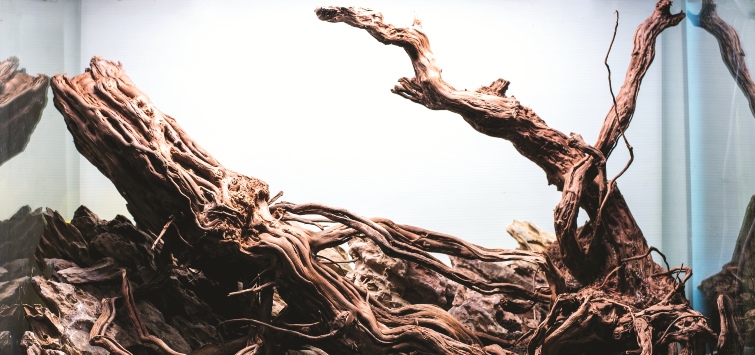
If a piece refuses to sink, you can tie it to a rock or weigh it down, but be prepared to wait. If you have to use rocks to weigh wood down, make sure you like them; large pieces of driftwood can take months or even more than a year to fully sink.
But be aware that driftwood and other botanicals, such as palm stems, seed pods, coconut husks, and leaves are rarely inert. Most contain some tannins—humic and tannic acids—that will leach out of them as they become waterlogged and begin to break down. Tannin-stained water can take on a yellowish or tea-colored tint that some aquarists find attractive, and others can’t stand.
Notably, fish feel the same way: Tannins can benefit species found in blackwater habitats, such as shadow catfish, checkerboard cichlids, chili rasboras, and butterfly barbs, but fish that thrive in hard water don’t tend to appreciate them. The amount of tannins leached and the speed with which they’re leached can depend on the wood or botanical type and how it’s been prepared.
Driftwood and botanicals will lower the pH of water in the aquarium in addition to adding a tint. The degree of impact will depend on the hardness of your water source. Harder water (water containing more minerals) has a higher buffering capacity whereas softer water (less minerals) has a lower buffering capacity.
But, you may ask, what the heck is buffering capacity? Think of it as the amount of wiggle room you have before the stuff you’ve added to your aquarium starts to lower the pH or otherwise seriously alter the water chemistry. If you’re using tap water loaded with minerals like calcium carbonate and sodium bicarbonate, driftwood and leaves might stain your water, but they’re unlikely to have much of an impact on your pH. If you’re using very soft water or water from a reverse osmosis filter, your water has little to no buffering capacity and adding wood and botanicals may radically impact your pH.
How do you know how hard your water is? Most municipal water utilities will provide at least some information on their website or via an annual water report. For a general idea, you can purchase a TDS (total dissolved solids) meter. These vary in quality and price but are simple to use—higher TDS generally equals harder water.
If you want specifics, you’ll need to invest in GH (general hardness) and KH (carbonate hardness) test kits. GH tells you how much dissolved mineral content is in your water, while KH is what determines buffering capacity and how resistant your pH is to change.
Do you have to invest in these things to safely use driftwood and botanicals? Not at all! A little prep work can go a long way in reducing tannins and other troubles. I recommend boiling or at least pre-soaking wood and botanicals. First of all, boiling and pre-soaking help ensure that your hardscape actually sinks. Most (not all) botanicals will float for at least a few days before becoming waterlogged and sinking. Boiling speeds this process up, and extracts tannins as well.
It’s not always possible to boil driftwood pieces, since some are too big. You can soak these in a tub or stock tank and change the water out a few times to help remove tannins before adding them to your aquarium (beware that tannins can permanently stain a bathtub, though). Adding activated carbon to your aquarium filter will also remove tannins.
Enjoying TFH Magazine? Subscribe Today!
Botanicals
Options for botanicals are even more varied. If you have oak, beech, or magnolia trees in your yard and you don’t treat your lawn with pesticides, leaves can be collected. If you have alder or birch trees, their dried cones add texture and even have some health benefits for fish.If you don’t have a safe source of leaves or botanicals, there are many vendors who sell them both in physical stores and online. Retailers also offer a very wide variety of botanicals, including seed pods of various sizes, bark, and stems and leaves from a variety of safe plants. One botanical I shy away from is peat moss. While it can be useful in an aquarium, it’s not a sustainable resource.
One thing to always keep in mind when using botanicals is that they decay and ultimately will add organics to your aquarium as they break down, and the same applies to driftwood. It’s not uncommon to see older driftwood sprouting algae, nor is it uncommon for a beautiful, branchy piece of manzanita to eventually turn into a sparse stick.
Wood and botanicals will break down on their own, but they also tend to get a lot of help in this process from plecos, shrimp, snails, and other aquarium inhabitants. Most botanicals break down much faster than driftwood, and I recommend practicing some moderation with the stuff—if you’ve ever smelled decaying leaves pulled from the bed of a stream or pond, you’ll understand why.
It’s also worth keeping in mind that, beyond just tinting your water, too much driftwood or too many botanicals can start to impact overall water quality. As these aquarium hardscape materials break down, they release dissolved organic carbon (DOC), which can fuel algae growth, bacterial blooms, and, in more extreme cases, some unpleasant smells. A few leaves or a nice piece of wood is usually no problem, but piling it on all at once can tip things in the wrong direction, especially in smaller or lower-flow setups.
When adding botanicals or driftwood, it’s best to go slowly and give the system time to adjust. Keep an eye on your pH, watch for increases in algae or cloudiness, and make sure everything stays stable.
Rocks
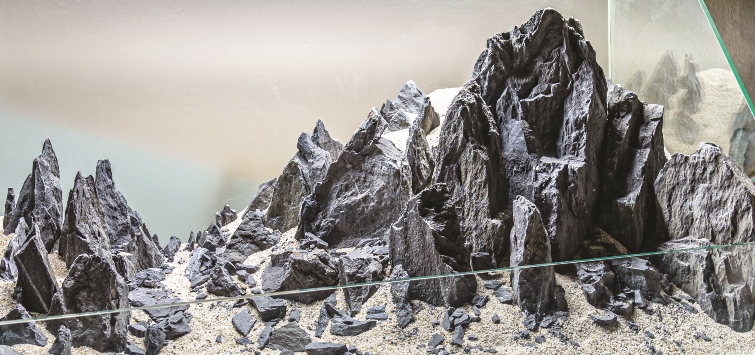
If you’re keeping Rift Lake cichlids, desert gobies, or mollies, reactive rocks might just be what you’re looking for. The calcium and limestone-based types slowly release minerals into your aquarium water, helping to keep pH stable and even raise it. This is why so many cichlid substrates include crushed aragonite (limestone), and why carbonate-containing rocks are so popular for these fish. Other kinds that can raise hardness include pagoda rock and seiryu stone.
If you’re keeping fish that prefer acidic or neutral pH, you’ll want to avoid these rocks. Fortunately, there are plenty of beautiful inert rocks to go around. Most river stones, dragon stones, elephant skin stones, slate, petrified wood, and lava rock have little to no impact.
If you’re looking for rocks on a budget, I tend to recommend against taking rocks “from the wild.” Odds are that the cool rock you picked up in a stream is somebody’s home; same for the one you dragged out of the dirt in your backyard. Wild rocks might also have spent years soaking in fertilizers or pesticides. Most are probably safe, but why risk making some poor hellgrammite homeless (or worse, bringing a very small hellgrammite back home and unintentionally moving it into your aquarium).
If you want rocks on a budget, look no further than your local landscaping or stone store. While you probably won’t find fancy varieties this way, you can usually find rounded river rocks, slate, flagstone, and sometimes lava rock, all at reasonable prices.
While stone stores probably won’t know much about whether the rock you picked is reactive or inert, you can get a pretty good idea by bringing some vinegar with you. If you pour vinegar on a rock and nothing happens, it’s usually inert. If it starts to fizz and bubble like that volcano science experiment you built in the 3rd grade, it’s reactive.
Either way, before putting stones in your aquarium, you’ll want to give them a thorough cleaning. Start with a good scrub using a stiff brush and plain water. If there’s stubborn dirt, a little salt can help as a mild abrasive.
Once they’re clean, you can sterilize them with a bleach soak. Fill a large tub with water and add a small amount of plain, unscented household bleach: roughly 1 part bleach to 20 parts water. It doesn’t have to be exact. Let the rocks soak overnight, then drain the solution and rinse them very thoroughly several times.
After that, it’s a good idea to let them air dry completely or give them a soak in water with extra dechlorinator. And one very important note: Never try to sterilize rocks by boiling or baking them. That can cause them to crack or even explode.
While rocks won’t decay and leave lots of organics all over your aquarium, large ones present a problem folks don’t always think about. They can be really heavy. If you’re putting a large rock in an aquarium, exercise caution. While smaller rocks can be placed on top of substrate or even directly onto the bottom of a tank, larger rocks can easily crack a tank, even with substrate underneath them.
When you’re using rocks that have some weight to them, or piling up several rocks in a concentrated area, go to a hardware store and buy yourself some plastic egg-crate light diffusers and line the bottom of your aquarium with them. These help distribute the weight and are easily hidden with substrate. It’s a lot easier to do this than it is to deal with a cracked tank.
Your Beautiful Aquarium
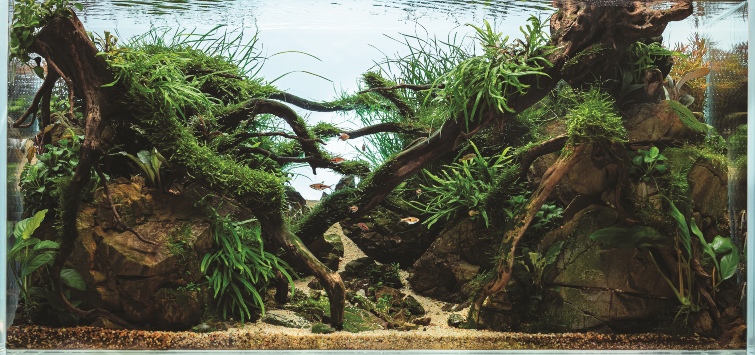
Just be sure you build something that brings you joy.