



Beautiful Blennies for the Reef Community
Marijke Puts
What’s a blenny, anyway? As with any common name applied to large groups of fishes, it depends a little on who you ask. The overarching order, the Blenniiformes, is a regular source of headaches for taxonomists. Some actually believe the damselfishes (including clownfishes), dottybacks, and gramma basslets belong to this group—not exactly fish that we aquarists would label as blennies.
Instead, I will only consider the elongated, scaleless, bottom-dwelling members of the suborder Blennioidei here. There are some fish that get called blennies but aren’t—they’re members of completely different orders. These include the scooter blennies and the convict blenny, both of which also have common names with “goby” in them, despite the fact that they’re not gobies, either!
The true blennies are quite a varied bunch, but they do have some things in common. Most are small, rarely exceeding 6 inches (15 cm) or so in length. When they’re not tucked away in bottles or other cramped hides, most prefer to spend their time sitting on the substrate or a comfortable perch rather than actively swimming. In fact, many blennies lack swim bladders, meaning they couldn’t swim around much even if they wanted to!
You can recognize the majority of blennies by their frog-like faces, with large, blunt heads, wide mouths, and bulging, expressive eyes that make them very endearing to look at (their expression is one of permanent shock or surprise, like they forgot to turn off the oven before leaving home). The head is usually adorned with fleshy ruffles of varying sizes known as cirri, which are thought to function somewhat like a cat’s whiskers and may also help the blenny blend in with its environment.
Blennies are omnivorous, with some species mostly favoring algae and others preferring to snack on crustaceans, mollusks, or sessile organisms. Many aquarists think of them exclusively as lawnmowers (and even use that name for one of them), but they offer a lot more than just aquarium maintenance. Some are proper centerpieces, and other are hardworking algae grazers, and those are the ones we’ll focus on here—as well as warn you about a few species with bad attitudes that are best left on the reef.
Enjoying TFH Magazine? Subscribe Today!
Ecsenius Clown Blennies
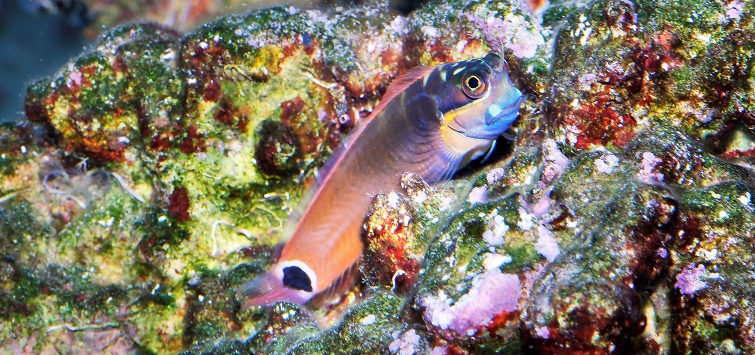
If we’re going to discuss show-stopper blenny fish species, there’s no way around the clown blennies. Quite a few of the more than 50 recognized members of this genus are found in the aquarium trade, and it’s not difficult to see why. They embody a rare triple combo of petiteness, politeness, and prettiness, making them ideal choices for peaceful, established reef systems. Most also eat algae, though they’re not quite as effective as the larger, true lawnmowers, like the genus Salarias.
Clown blennies—I’m not sure where the name came from, but it might be their expression, which is singularly silly even for a blenny—are naturally found on shallow, stony reefs. In the aquarium, most can be considered reef-safe; if you see yours picking at corals, ask yourself whether it’s getting enough to eat before you banish it to the sump. Hungry blennies are not unheard of in systems where algae is in short supply, and regular supplemental feedings are recommended.
The most popular Ecsenius blennies, which should be available in your average saltwater aquarium store, are the Midas blenny (Ecsenius midas) and the tailspot blenny (E. stigmatura). The latter can be recognized by its blue head fading into a coppery body, plus that striking black-on-white tail spot.
The Midas blenny, which is canary yellow with a variable degree of pink, is even easier to tell apart from the rest of the bunch. Its beautiful color isn’t coincidental: Many blennies help avoid predation by mimicking other fish. By matching female lyretail anthias, the Midas blenny gets a free pass to school alongside them and benefit from safety in numbers.
Although they’re not as common, a few other highly colorful clown blennies might pop up in shipments. The Red Sea mimic blenny (E. gravieri) mimics the well-armed blackline fang blenny (a blue-and-yellow species we’ll meet later) in order to be left alone. And then there’s the tiger blenny (E. tigris), a barred little jewel from the reefs of Australia.
Meiacanthus Fang Blennies
If you haven’t heard of fang blennies before, the concept of a blenny with teeth may come as a surprise. Those fangs aren’t meant for feeding, either: Science publications had a field day when it was discovered in 2017 that species across the genus Meiacanthus produce an opioid venom. They strike when attacked, with their venom causing a sudden drop in blood pressure in the predator. This usually disorients it enough to drop the blenny.
Its venomous nature has made Meiacanthus a highly popular genus among mimic blennies, as most predators know to leave these fish well alone. Various species, including the Red Sea mimic, imitate their colors and patterns. The most notorious are Plagiotremus blennies, which are lovely to look at but not at all suitable for our community reefs—they use their mimicry to ensure other fish don’t fight back when they take bites out of them!
Despite their scary teeth, Meiacanthus blennies don’t seek out trouble, and in fact they make great additions to a peaceful community aquarium. They readily eat frozen foods but leave corals alone, and they are considered hardy. Semi-aggressive systems also work, as long as there are no relentless bullies present (looking at you, dottybacks and damsels!).
Specialized online aquarium retailers will carry a range of fang blennies, but the most colorful probably include the blackline fang blenny (Meiacanthus nigrolineatus), with a blue head that fades into a yellow tail and a black lateral stripe. Also on that list would be the canary fang blenny (M. oualanensis), which is such a bright yellow it almost warrants sunglasses. And then there’s the striped blenny (M. grammistes), which looks as if someone took a blackline fang blenny, swapped its colors, added a few more lateral stripes, and voilà—brand-new fish!
The Algae Munchers
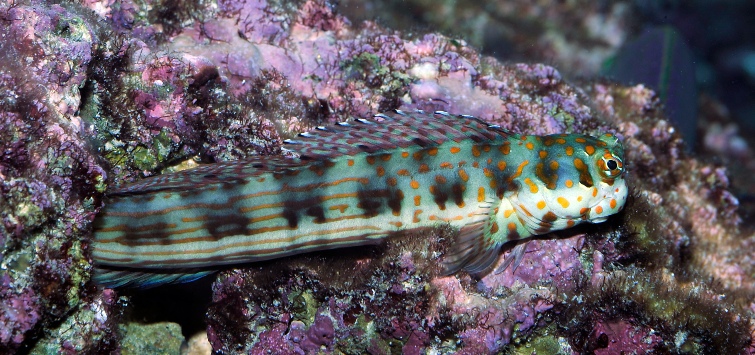
The aforementioned showstoppers are spectacularly colored because they’re associated with colorful corals (clown blennies) or to advertise their toxicity (fang blennies). The dedicated algae munchers don’t usually show this degree of color, but there are exceptions. If you want the lawnmower/colorful/good neighbor trifecta, these are some of the best blennies for reef tanks:
SALARIAS
This genus is mostly known for Salarias fasciatus, the lawnmower or jeweled blenny. Although that one’s undoubtedly the best algae eater in the genus, it’s not the prettiest of the group. For bold colors and patterns, instead try the dotted starry blenny (S. ramosus) or the lovely barred segmented blenny (S. segmentatus).
Salarias blennies are quite hardy, but their dependence on algae and biofilm means they’re only suitable for mature systems. Whatever the algae status in your tank, regular supplemental veggie foods will be much appreciated.
HYPSOBLENNIUS
Despite some species’ lovely colors and the interesting ecology of the genus as a whole (most are shell dwellers inhabiting oyster reefs and empty barnacle clusters), Hypsoblennius is unlikely to win any popularity contests. This is likely because many of its members are native to obscure localities in the Eastern Pacific, which isn’t exactly a hotspot for aquarium collection.
There is one exception: Hypsoblennius invemar, better known as the tessellated blenny. Its polka-dotted red and neon blue pattern makes this one of the best-looking blennies for a reef tank, and as an added bonus, it’s known to be hardy and a reliable algae eater. Although availability is still spotty, there’s a confirmed supplier: Panamanian aquaculture company Bocas Mariculture cracked the captive breeding code in 2024 and now distributes these blennies to Biota. Ramp it up!
BLENNIELLA
Like Hypsoblennius, the genus Blenniella boasts a single stunning superstar and is otherwise completely ignored by the aquarium hobby. I guess the other species just can’t compete with the pattern on Blenniella chrysospilos, better known as the red-spotted blenny—I particularly like how its neon orange polka dots extend to the eyes.
You should have little trouble finding a red-spotted blenny for sale. They’re widely appreciated for their algae-munching capabilities and do well in captivity. The only trouble reefers sometimes run into is common to all algae-eating blennies: Even if they don’t tend to eat them, they sometimes bother corals and clams with their incessant browsing.
ENCHELYURUS
Yet another one-hit wonder: the genus Enchelyurus, which contains five species, is almost exclusively known for the spectacular flametail blenny. Its lonely position at the top is well-deserved, because wow! This species’ almost black front half, which fades into bright yellow toward the tail—especially on the elongated dorsal and anal fins—makes it a real looker.
Because flametail blennies are bred in captivity, you should have little trouble finding one. Their care is standard for algae-eating blennies, with the main bottleneck being starvation in overly clean tanks. Aside from that, flametails are considered easy, hardy, and peaceful.
Cirripectes
When I say “blenny,” you usually don’t say “Cirripectes!” But maybe you should, because this genus doesn’t just eat algae like a champ, but it also boasts a few of the best-looking blennies of all. Availability for most is spotty, but they’re worth joining the waitlist.
The pretty reticulated ember blenny (Cirripectes stigmaticus), the most popular member of the genus, is moderately easy to find. The eared blenny (C. auritus), with its pinkish body and fine peppering of dark red dots, is significantly more challenging to locate, as is the rare chestnut eyelash blenny (C. castaneus). The rest never really shows up in the trade yet—hey, suppliers, we want more blennies!
The Triplefins
Some of the most colorful blennies simply don’t do well in our tanks. I regularly spot a lovely yellow number known as the ringneck blenny (Parablennius pilicornis) while snorkeling in the Mediterranean, for example, but its track record in the aquarium is apparently terrible.
However, there is an entire blennioid family that can do well in captivity but still flies under the radar: the tiny (but spectacular) Tripterygiidae or triplefins.
One of my favorite triplefins is another frequent Mediterranean flyer, the red-black triplefin (Tripterygion tripteronotum). I think the only reason it isn’t available more often is its sea of origin. We tend to shy away from Mediterranean fish because we figure they need cooler water, but that’s not always the case. I can attest to this triplefin, the males of which are a bright red and sport a cool sail fin, liking things toasty: It inhabits tidepools that feel warm as bath water, and flees to deeper waters in winter to avoid the cold.
Do Not Try These at Home
I’ve already discussed Plagiotremus, a genus of fang blennies that imitates the venomous Meiacanthus in order to, basically, harass other fish. Unless you’re looking for a novelty for a specimen tank, you’d do best to pass up on these blennies. And they’re not the only Blennioidei that refuse to play nice!
Most importantly, avoid blennies that look suspiciously like a bluestreak cleaner wrasse (Labroides dimidiatus). These mimics use the wrasse’s color and pattern—which signal cleaning services—to lure fish close enough to take a bite out of them. Plagiotremus rhinorhynchos can come in either Meiacanthus or Labroides flavor, and neither is good news. Aspidontus taeniatus and tractus, also fang blennies, even manage to imitate the wrasse’s wiggle swimming style.
Aside from the mimics, I also sometimes see Ophioblennius species, like the horseface blenny (Ophioblennius atlanticus) offered for sale. Now, almost all blennies will attack species that look too much like themselves. Blenny-on-blenny violence is the reason you’re best off limiting yourself to one species per aquarium. But red lips just take it too far for my taste, viciously attacking even much larger non-blenny tankmates. Given the damage their elongated canines can do, they’re not suitable for the peaceful community.
Lastly, I want to mention Exallias brevis, the leopard blenny. It pops up in aquarium stores sometimes thanks to its fantastic looks, but it feeds exclusively on stony coral polyps. If you can provide a large amount of those, go right ahead—but forget about switching a leopard blenny to frozen foods, because they flat-out refuse and will simply starve.
Just Scratching the Surface
With more than 400 species out there, if you’re looking for a colorful, well-behaved blenny for your reef aquarium, you’re spoiled for choice. And that’s considering we haven’t even tapped all of the suitable and good-looking species yet—not by a long shot!